In celebration of Saudi National Day discount 15% use code Watan


















Blog

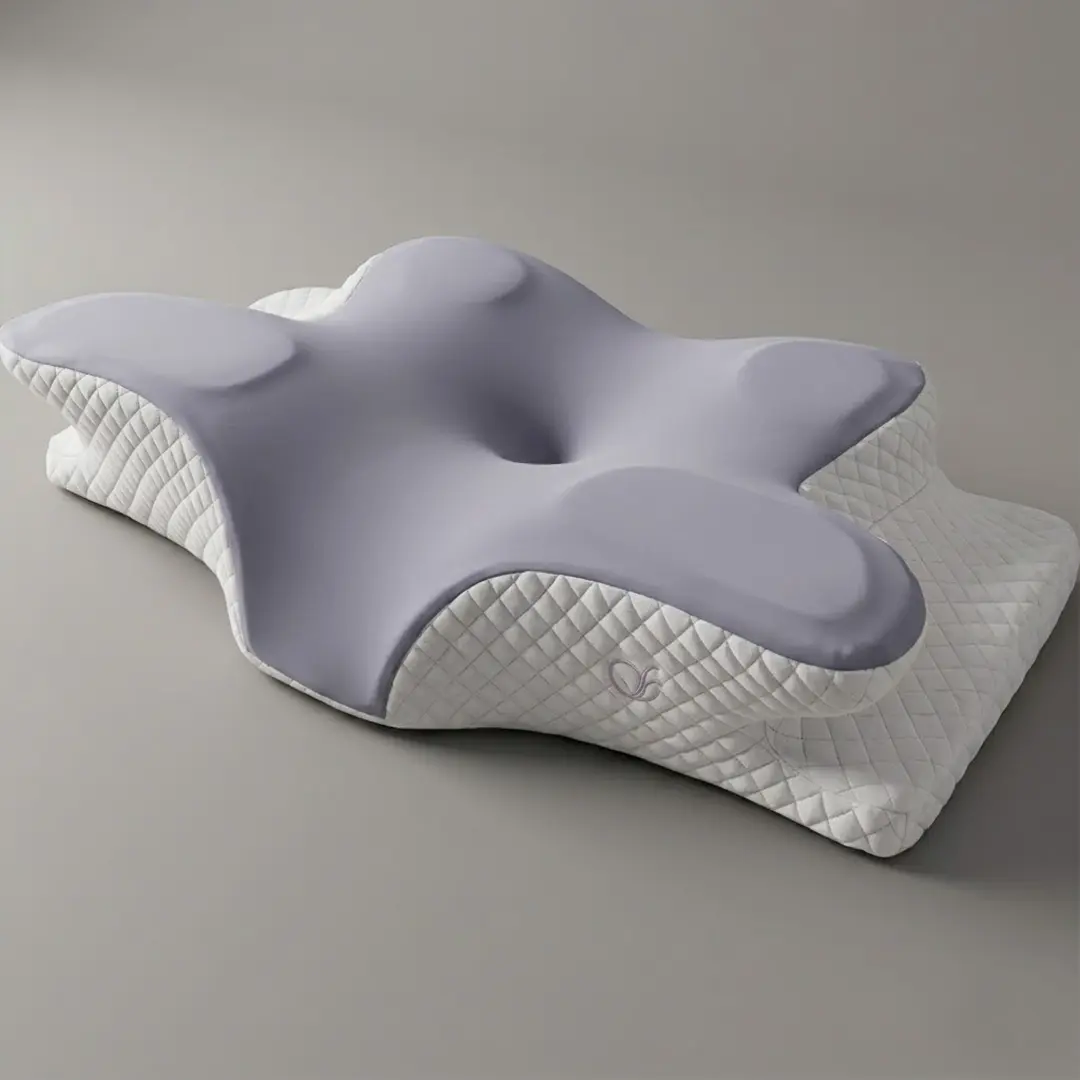
Finding the best type of pillow for neck pain requires matching your sleep position with the correct loft and material. A misaligned cervical spine causes muscle stiffness and chronic tension. Therefore, selecting an orthopedic pillow that properly supports your neck’s natural curve is essential for recovery. Memory foam is highly recommended because it adapts perfectly to pressure points. In this complete guide, we will explore the precise specifications you need to choose the perfect pillow and finally sleep pain-free tonight.
Why Your Pillow Is the Leading Cause of Neck Pain)
The cervical spine–pillow biomechanics
The human cervical spine consists of seven distinct vertebrae. Consequently, your pillow height directly controls the critical alignment of the C4–C6 segments.
Sleeping on the wrong loft causes a lateral neck bend, leading to the overactivation of your trapezius and levator scapulae muscles overnight.
In fact, data from the Sleep Foundation indicates that 1 in 3 people with chronic neck pain report their symptoms worsen immediately after sleep.
4 signs your pillow is causing your neck pain
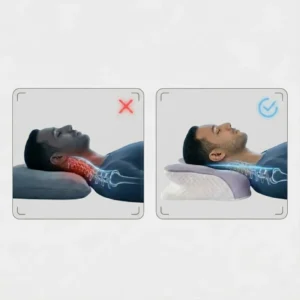
Identifying the root cause is the first step toward relief. You are likely using the wrong orthopedic setup if you experience:
- Morning stiffness that noticeably eases within 30 minutes of waking up.
- Pain that feels significantly worse on the specific side you sleep on.
- A pillow that has compressed more than 30% from its original height.
- The constant need to fold or adjust your pillow during the night.
Diagram: Cervical Alignment Postures
- Cervical Neutral Alignment: Spine straight, muscles completely relaxed (Ideal).
- Lateral Bend: Pillow too high/low, unequal muscle strain (Primary pain source).
- Forward Head Flexion: High loft pushing chin to chest (Airway restriction).
Best Type of Pillow for Neck Pain by Sleep Position
Finding the best type of pillow for cervical pain means analyzing hard data. Loft and density must precisely match your primary sleep position to maintain spinal alignment.
Best memory foam pillow for back sleepers
Back sleepers require an ideal loft of 7–10 cm and a medium-firm density (40D–45D) to comfortably maintain the natural cervical lordosis.
A contour shape is highly preferred because it gently cradles the occiput while actively preventing the head from rolling laterally.
You must avoid high loft pillows, which force the neck into a forward flexion posture. Accordingly, upgrading to a specialized cervical pillow with a contoured design is fully optimized for back sleeping.
Best pillow type for side sleepers with neck pain
Side sleepers need a much higher ideal loft, typically between 10–14 cm, to completely fill the gap between the shoulder and the neck.
You should look for firm memory foam (45D–50D) or latex, which successfully maintains its structural height under a full shoulder load.
To test your setup, your spine should be completely parallel to the mattress with absolutely no lateral tilt downward.
Best memory foam pillow for stomach sleepers
Stomach sleeping is the most harmful position for cervical health. If you cannot change, the ideal loft is under 7 cm, or as flat as possible.
A flat profile significantly reduces the severe cervical rotation strain caused by turning the head sideways to breathe.
Because this position is problematic, using a multi-position support pillow as a body prop can physically discourage stomach sleeping entirely.
Table: Sleep Position × Ideal Specifications
- Back Sleeper: 7–10 cm Loft | 40D–45D Density | Contour Shape | Awlait Cervical Pillow
- Side Sleeper: 10–14 cm Loft | 45D–50D Density | Firm Block | Awlait High-Loft Pillow
- Stomach Sleeper: <7 cm Loft | 30D Density | Flat Profile | Awlait Multi Position Pillow
Type of pillow for cervical pain: Full Material Comparison
Memory foam — best for chronic neck pain
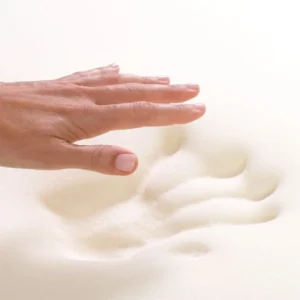
Memory foam dynamically adapts to your head shape, evenly distributing pressure points across the entire cervical curve.
Density fundamentally matters here; a minimum of 40D is required, as anything under 40D collapses under head weight and loses orthopedic value.
While heat retention is a known downside of dense foam, look for open-cell or gel-infused variants designed specifically for warmer climates like the KSA and UAE.
Latex — most durable + hypoallergenic
Latex offers a natural, responsive bounce, returning to its original shape immediately without the sinking “sleeping in a hole” effect.
It provides significantly better airflow compared to traditional polyurethane foam, making it ideal for naturally regulating sleep temperature.
Furthermore, a high-quality latex pillow boasts an impressive lifespan of 5–8 years, far outlasting standard memory foam options.
Is memory foam or down pillow better for neck pain?
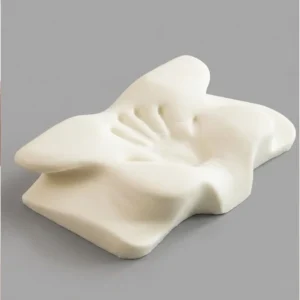
Down pillows are ultra-soft but quickly collapse under head weight, offering absolutely zero structural cervical support.
While down alternative options are slightly firmer, they still remain vastly insufficient for serious orthopedic pain cases.
Ultimately, the best type of pillow for cervical pain is memory foam, as down only wins for general luxury comfort, not medical spinal alignment.
Is It Better to Sleep on a Hard or Soft Pillow for Neck Pain?
The firmness–position relationship
Side sleepers require a firm surface that must forcefully resist the full shoulder load without collapsing mid-night.
Back sleepers need a medium firmness, providing just enough give to cradle the occiput without pushing the neck forward.
Conversely, stomach sleepers need a soft or flat surface, as less physical resistance equals less forced cervical rotation.
The soft pillow trap — why “comfortable” ≠ “correct”
Placing an overly soft pillow under a side sleeper creates a dangerous 15–25° lateral neck bend that persists all night.
This cumulative muscle strain, calculated over 6–8 hours and repeated nightly, actively locks the body into a chronic pain pattern.
Therefore, understanding this firmness relationship is crucial when evaluating the best type of pillow for cervical pain.
Can a Pillow Help with Sleep Apnea? (And What Type Is Best)
How pillow elevation affects airway openness
A 30° head elevation effectively reduces soft palate collapse, which in turn actively reduces snoring frequency and airway obstruction.
It is crucial to note that a pillow is not a medical treatment, but rather serves as a biomechanical adjunct support mechanism.
Always consult a certified sleep specialist if you are formally diagnosed with Obstructive Sleep Apnea (OSA) before changing your orthopedic bedding.
Best pillow type for sleep apnea + neck pain combination
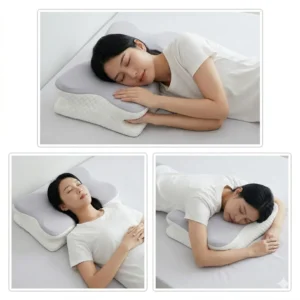
A wedge-style or adjustable elevation pillow perfectly combines necessary airway clearance with highly stable cervical support.
Using a multi-position support pillow provides this critical elevation while physically preventing unwanted tossing and turning.
How to Choose the Best Pillow for Neck Pain: 5-Criterion Decision Framework
Selecting the best type of pillow for neck pain requires following a strict, numbers-based orthopedic checklist:
- Loft: Match the height precisely to your primary sleep position, using our earlier sizing reference to prevent lateral bending.
- Density: Ensure a minimum of 40D for memory foam, which is an absolutely non-negotiable metric for chronic pain management.
- Shape: Select a contour design for back sleepers, flat for stomach sleepers, and high-loft rectangular for side sleepers.
- Cover: Demand a removable, washable, and breathable fabric, prioritizing hypoallergenic materials if you have any history of skin allergies.
- Warranty: Look for a non-collapse guarantee of at least 12 months, though premium Awlait products confidently offer 24 months.
Neck Pain Beyond the Pillow: The Full Spine Support System
How daytime posture worsens nighttime neck pain
Tech neck and forward head posture chronically tighten your cervical extensors, and even the best type of pillow for neck pain cannot undo 8 hours of daytime strain.
Maintaining correct sitting posture at your computer is the ultimate daytime prerequisite for nocturnal discomfort relief.
Adding a back support cushion for office chairs ensures proper lumbar stability, which directly reduces involuntary cervical compensation.
Car commute — the hidden neck pain trigger
Most car headrests sit too low and force the neck backwards; the top of your headrest should always perfectly align with the top of your ears.
Furthermore, the lack of lower back support in vehicles causes a slouched posture that reverberates up the spine.
Installing a back support for car seat setups restores the natural lumbar curvature, actively reducing forward head lean while driving.
Lower body support chain — feet → pelvis → neck
An elevated leg position visibly reduces posterior pelvic tilt, which systematically eases the thoracic to cervical tension chain.
Using a foot rest cushion for leg elevation during sleep or seated work creates a state of total-body orthopedic alignment.
Similarly, utilizing a coccyx cushion for pelvic alignment actively corrects the pelvic tilt at its exact source, deeply relieving upper-body neck compensation.
The height (loft) of your pillow is scientifically more critical than the material itself when addressing cervical pain. Even a high-density memory foam pillow will fail to provide relief if its height creates a lateral bend in your spine; always prioritize a loft that keeps your nose in line with your sternum.
Frequently Asked Questions: Best Type of Pillow for Neck Pain
What type of pillow is recommended for neck pain?
For most sufferers, a Contour Memory Foam pillow with a density of at least 40D is the gold standard. This specific type of pillow for neck pain provides structural support for the cervical arch while allowing the head to sink into a neutral position, provided the loft is matched to your shoulder width.
Is it better to sleep on a hard or soft pillow for neck pain?
The answer depends entirely on your position. Side sleepers require a firm pillow to bridge the gap between the ear and the mattress, whereas back sleepers benefit from medium firmness. A “soft” pillow is usually the worst type of pillow for neck pain as it offers zero resistance to the weight of the head.
Can a pillow help with sleep apnea?
Yes, a specialized wedge pillow can help by maintaining a 30° head elevation, which prevents the soft tissues of the throat from collapsing into the airway. While the best type of pillow for cervical pain usually focuses on alignment, a multi-position support pillow can address both airway openness and spinal neutral.
Is memory foam or down pillow better for neck pain?
Memory foam is superior for pain management. Down pillows lack the “push-back” force required to hold the neck in place, leading to muscle fatigue by morning. For those seeking the best type of pillow for neck pain, memory foam’s ability to maintain its shape throughout the night makes it the clear medical choice.
Best Pillow for Neck Pain: Final Recommendations by User Type
| User Category | Recommended Type | Ideal Loft | Key Feature | Recommended Product |
| Chronic Neck Pain | Contour Memory Foam | 7-12 cm | Cervical Support | Awlait Cervical Pillow |
| Side Sleeper | High-Density Foam | 10-14 cm | Shoulder Clearance | Awlait Firm Support |
| Back Sleeper | Medium Contour | 8-10 cm | Occipital Cradle | Awlait Cervical Pillow |
| Stomach Sleeper | Ultra-Thin Foam | <7 cm | Minimal Rotation | Multi Position Pillow |
| Sleep Apnea | Elevated Wedge | 30° Incline | Airway Support | Multi Position Pillow |
| Full Body Relief | Orthopedic Kit | Variable | Pelvic Alignment | Foot Rest + Coccyx |
Expect improvement in neck pain within 1–2 weeks of consistent use. Switching to the best type of pillow for neck pain requires a short adjustment period as your muscles unlearn years of poor posture.
- Shop Awlait Cervical Pillow for Neck Pain Relief
- Browse Multi-Position Orthopedic Supports
- Complete Your Spine Support with a Foot Rest Cushion

Related posts
How to Ease Lower Back Pain

How to Ease Lower Back Pain: Safe Home Care, Exercises, and Warning Signs
The best way to ease lower back pain is usually to remain ge...

Herniated Disc Pain Relief
Herniated Disc Pain Relief
Herniated Disc Pain Relief starts with gentle activity, brief rest, supportive sitting and sleeping positio...
Best Recliner for Back Pain
Best Recliner for Back Pain: The Ultimate Ergonomic
Finding the best recliner for back pain requires selecting a seat built on ergono...
How to Choose a Recliner Chair
How to Choose a Recliner Chair: An Ergonomic & Buyer's Guide
Learning How to Choose a Recliner Chair comes down to evaluating your...
Recliner Chair Prices
Awlait recliner chair prices currently start from SAR 1,269 and can reach SAR 2,815, depending mainly on the selected reclining mechani...

How to Relieve Back Pain
Learning how to relieve back pain requires a structured, step-by-step approach. It begins with applying cold therapy to soothe lumbar m...
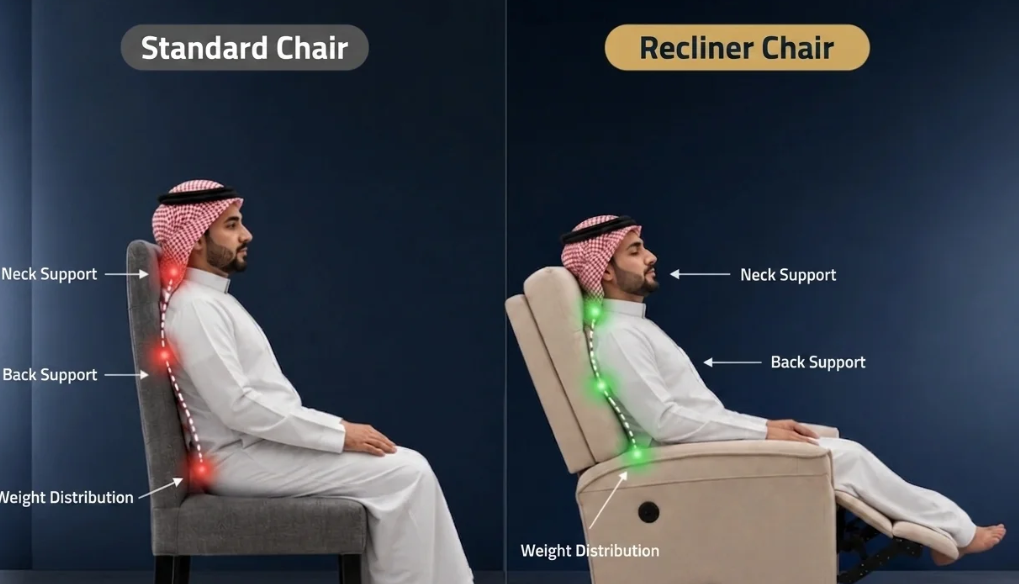
benefits of recliner chair
The benefits of recliner chair extend far beyond simple relaxation, offering comprehensive body support and relieving stress on joints ...
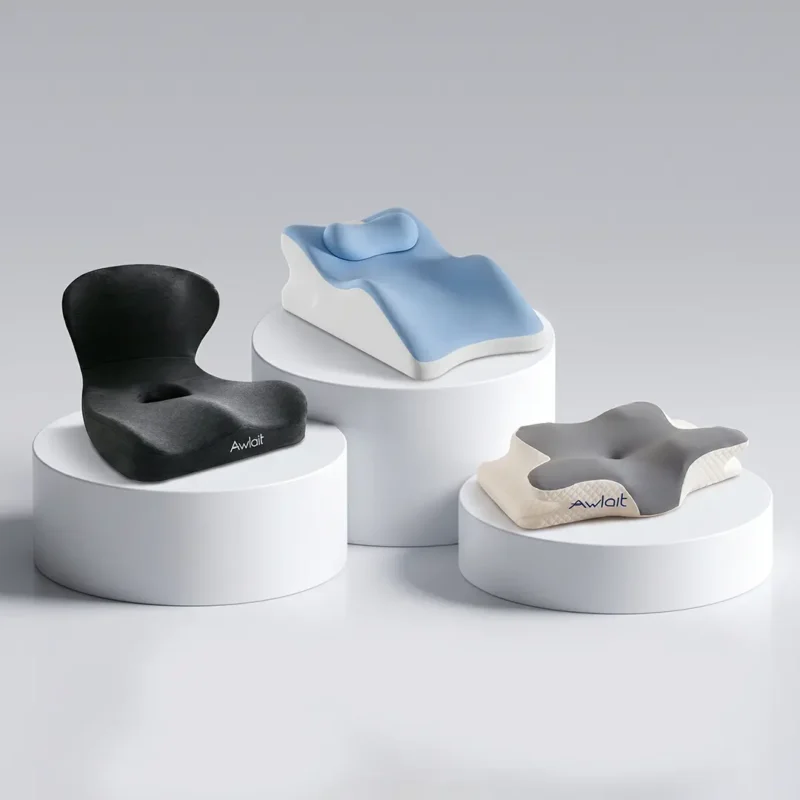
Best Memory Foam Pillows in 2026
The best memory foam pillows are engineered to provide superior cervical support by adapting to the unique contours of your head and ne...
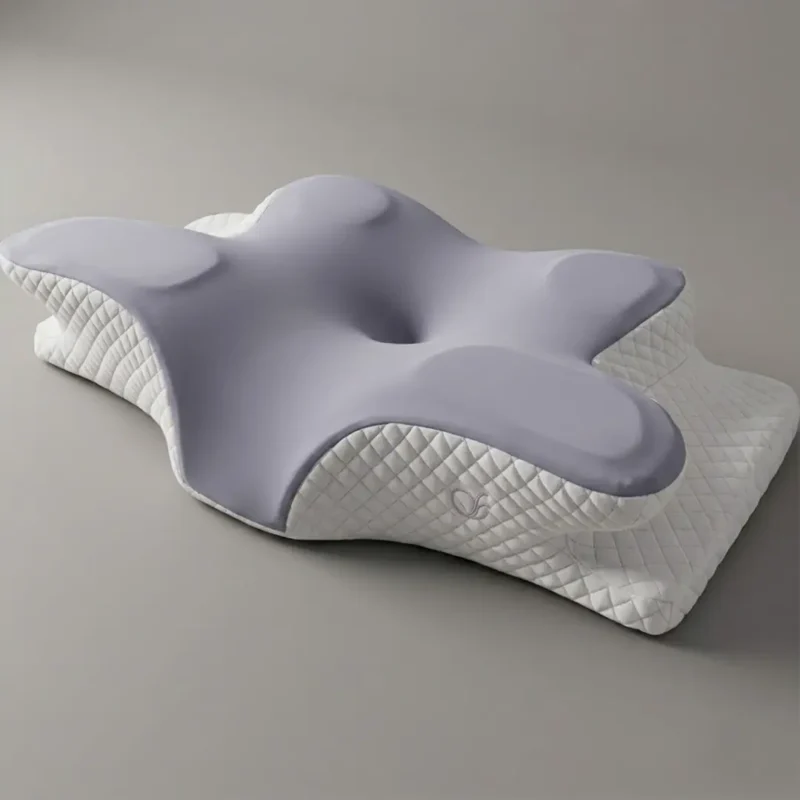
Best Type of Pillow for Neck Pain: Orthopedic Guide by Sleep Position
Finding the best type of pillow for neck pain requires matching your sleep position with the correct loft and material. A misaligned ce...
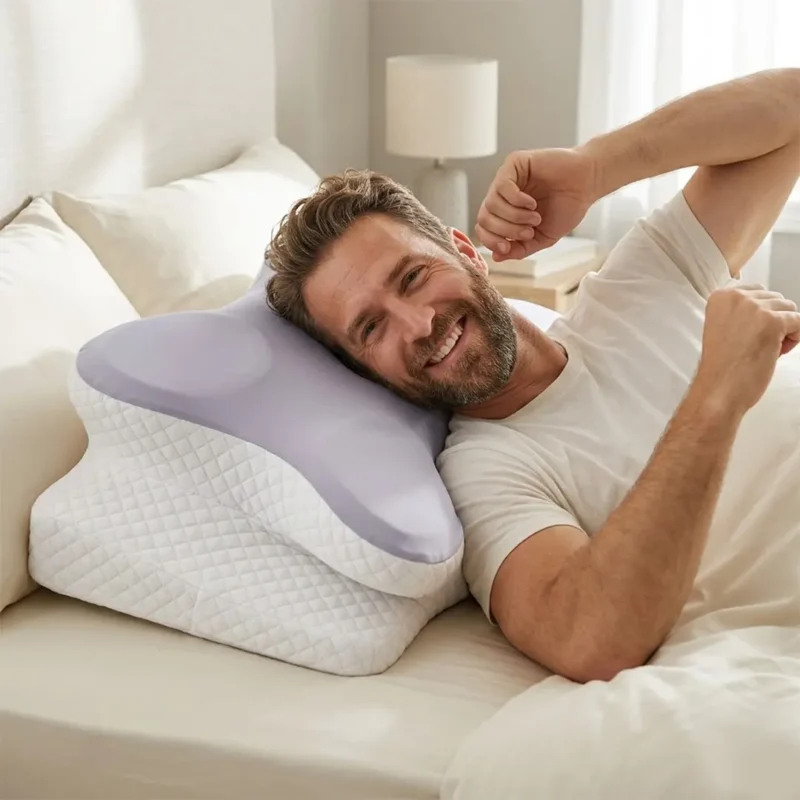
Best Pillow for Sleeping in 2026
Finding the best pillow for sleeping is essential for maintaining spinal health and ensuring restorative rest throughout the night. You...
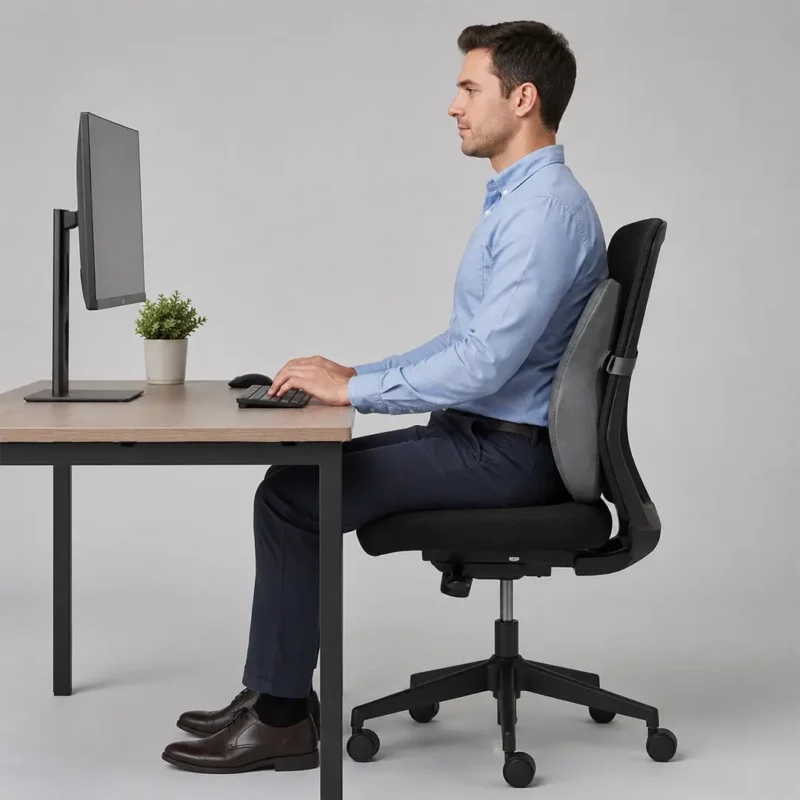
Correct Sitting Posture in Front of Computer
Maintaining correct sitting posture in front of computer screens is absolutely essential to prevent chronic musculoskeletal disorders a...
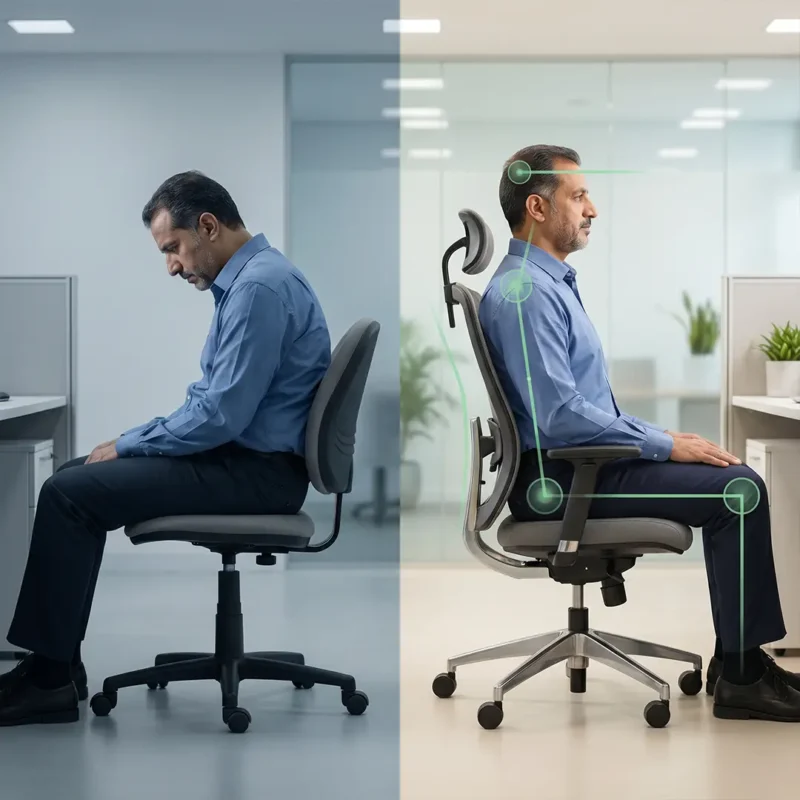
Proper Sitting Posture: How to Sit Correctly for Better Back Health
Proper sitting posture is the simplest way to reduce strain when you work, study, or relax for long hours. It means aligning your feet,...